Introduction:
Ushering in the Hydrogen Era
As the world accelerates towards net-zero targets, green hydrogen has emerged as a game-changing fuel. Among the innovative solutions to integrate hydrogen into the energy ecosystem is hydrogen blending in existing natural gas pipelines. This method not only facilitates the use of clean energy but also leverages existing infrastructure saving billions in new development costs.
For countries like India, which are investing heavily in renewable energy and energy transition, hydrogen blending is being seen as a crucial step toward decarbonizing the gas sector. But as promising as it sounds, it brings its own set of engineering, regulatory, and safety challenges.
What Is Hydrogen Blending in Natural Gas Pipelines?
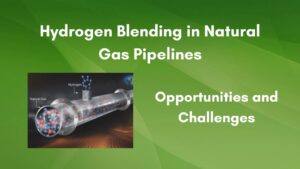
Hydrogen blending refers to the mixing of hydrogen gas with natural gas in existing pipeline networks. The blend is transported through gas distribution pipelines to industrial, commercial, and residential consumers. Typically, blending up to 20% hydrogen by volume is considered technically feasible in many existing networks without major modifications.
Top Opportunities in Hydrogen Blending
1. Infrastructure Optimization
Utilizing existing natural gas infrastructure avoids the cost of building new hydrogen-only pipelines, making the energy transition more economical and faster to deploy.
2. Emission Reduction
Blending even 10–20% hydrogen significantly reduces CO₂ emissions, aligning with global decarbonization targets and India’s Green Hydrogen Mission.
3. Industrial Applications
Hydrogen blended gas can serve as a clean feedstock for steel manufacturing, refineries, and fertilizer plants industries traditionally hard to decarbonize.
4. Renewable Energy Storage
Green hydrogen produced from excess solar or wind energy can be stored and transported via pipelines, addressing the intermittency of renewable sources.
Major Challenges in Hydrogen Blending
1. Material Compatibility
Hydrogen is highly reactive and can cause embrittlement in steel pipelines, valves, and welds. Retrofitting or upgrading parts of the pipeline infrastructure becomes necessary.
2. Safety and Leak Detection
Hydrogen leaks are harder to detect than natural gas leaks, and its flammability range is wider posing safety challenges for both operators and consumers.
3. Regulatory Framework
India currently lacks a clear regulatory standard for hydrogen blending. Uniform guidelines on blending ratios, quality standards, and end user impact are essential.
4. End Use Equipment Compatibility
Most existing burners, turbines, and appliances are designed for pure natural gas. Higher hydrogen blends can lead to equipment inefficiency or safety risks without adaptation.
Hydrogen Blending in India: The Road Ahead
India’s National Green Hydrogen Mission targets 5 MMT (million metric tonnes) of green hydrogen production per year by 2030. Several pilot projects are already underway to assess the feasibility of hydrogen blending in CGD networks.
TDFM Infra and similar EPC pioneers in pipeline infrastructure are now focusing on hydrogen-ready pipeline design, advanced leak detection systems, and retrofit strategies to future proof India’s energy systems.
Conclusion:
Balancing Promise with Practicality
Hydrogen blending in natural gas pipelines offers a fast track route to decarbonization, cost efficiency, and energy diversification. But the road is not without bumps. Engineering challenges, policy uncertainties, and end user safety must be addressed through cross sector collaboration, robust R&D, and forward looking infrastructure planning.
As India pushes toward a hydrogen powered future, embracing the blending model with cautious optimism and smart investment can play a pivotal role in shaping the nation’s sustainable energy roadmap.